About Cobalt Sulphate
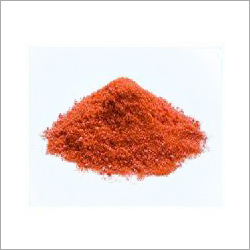
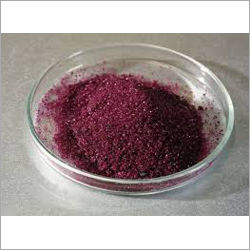
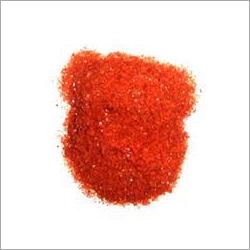
We are a leading company specializing in the business of offering our clients Cobalt Sulphate. It is a reddish, toxic, metallic salt. This compound is used in the electrochemical industries, as a drier in paints and inks, as a coloring agent, in storage batteries and as a supplement for Vitamin B12 deficiency. It has an important role as a carcinogenic agent and a genotoxin. To ensure transportation, we pack this chemical powder in air tight containers and store in our capacious warehouses till the time of final shipment. Cobalt Sulphate is prepared by reacting cobalt metal or cobalt oxide/hydroxide with aqueous sulfuric acid.
Reliable Packaging and Storage
Cobalt Sulphate is supplied in robust HDPE bags or drums, ensuring safe transportation and storage. It should be kept in a cool, dry, well-ventilated space, away from incompatible substances such as oxidizing agents and alkalis, to retain its stability and efficacy throughout its two-year shelf life.
Versatile Industrial ApplicationsWidely recognized for its efficiency, Cobalt Sulphate is used in electroplating, pigment production, and as a micronutrient in animal feed. Its fine crystalline form and high purity support diverse processes, bolstering product quality in various industrial and laboratory environments.
FAQs of Cobalt Sulphate:
Q: How is cobalt sulphate typically used in industrial and laboratory settings?
A: Cobalt sulphate is employed extensively in electroplating, pigment manufacturing, and as a nutritional additive in animal feed. It serves as a valuable source of cobalt ions and is preferred for its solubility and stable crystalline structure.
Q: What are the recommended storage conditions for cobalt sulphate to ensure stability and safety?
A: Store cobalt sulphate at room temperature (1530C) in a cool, dry, and well-ventilated area, away from oxidizing agents and alkalis. Employ HDPE bags or drums to prevent moisture absorption and preserve product quality during its two-year shelf life.
Q: When should first aid measures be implemented if accidental exposure occurs?
A: Immediate first aid should be administered if cobalt sulphate is ingested, inhaled, or contacts the skin or eyes. Rinse affected areas with plenty of water and seek medical attention promptly for further evaluation and treatment.
Q: Where should cobalt sulphate be transported and handled, considering its hazard classification?
A: Due to its Hazard Class 6.1 (toxic substances) and UN Number 3288, cobalt sulphate must be handled and shipped as hazardous cargo, with adherence to safety protocols. Appropriate packaging in HDPE containers is required for compliance and environmental protection.
Q: What process should be followed to minimize environmental risks when using cobalt sulphate?
A: Prevent spills and uncontrolled release, as cobalt sulphate is harmful to aquatic life. Proper containment, waste management, and avoidance of incompatible substances help reduce environmental risks during handling, usage, and disposal.
Q: What are the benefits of using cobalt sulphate in electroplating and pigment manufacturing?
A: Cobalt sulphates fine crystalline structure, high purity, and excellent solubility contribute to enhanced uniformity and quality in electroplating and pigment production processes, resulting in a durable, vibrant finished product.
 Send Inquiry



 Send Inquiry


 Send Inquiry